
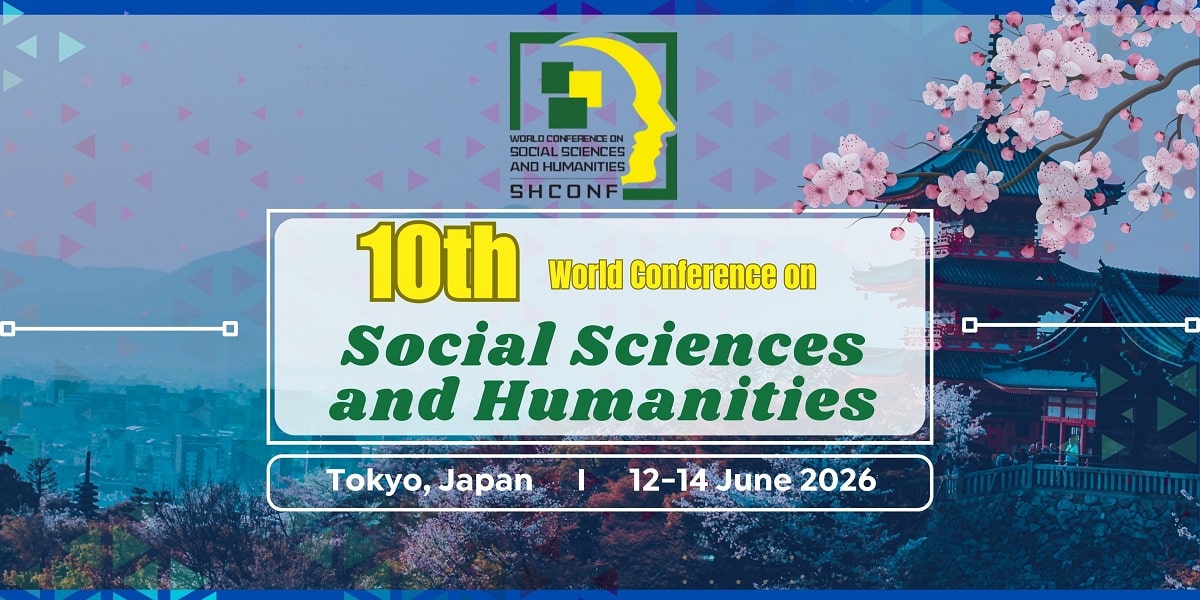
Exploring Society, Power, Culture, and the Human Experience
The 10th World Conference on Social Sciences and Humanities invites scholars, researchers, and professionals to engage in one of the most comprehensive interdisciplinary platforms dedicated to understanding society and the human condition in all its complexity.
Brings together diverse yet interconnected fields to explore how social structures, political systems, legal frameworks, communication, psychology, language, philosophy, education, history, arts, and geography shape our collective past, present, and future.
A Global Lens on Society and Social Change
This section examines society through sociology and anthropology, addressing pressing issues such as identity, ethnicity, gender, aging, migration, social inequality, family dynamics, youth culture, discrimination, violence, and social mobility. From globalization and consumer culture to digital communities, online behavior, and social media influence, discussions highlight how modern societies evolve—and fracture—under global pressures.
Power, Politics, and Justice in a Changing World
Political science, international relations, and law take center stage in conversations around democracy, governance, human and civil rights, public policy, populism, executive power, global institutions, international justice, and security. Topics span constitutional systems, elections, political communication, media influence, criminal justice, policing, cybercrime, human rights law, and international conflict, offering critical insight into the forces shaping global order and accountability.
Culture, Communication, and Media Landscapes
Participants will explore media, communication, and cultural studies, including journalism, social media, digital ethics, political communication, advertising, misinformation, film, television, and visual culture. These sessions investigate how narratives are constructed, contested, and consumed—shaping public opinion, identity, and collective memory.
Mind, Language, and Meaning
The conference delves deeply into psychology, linguistics, and philosophy, examining human behavior, cognition, mental health, learning, language acquisition, sociolinguistics, psycholinguistics, and philosophy of language. Philosophical traditions—from ancient to postmodern, Eastern to Western—frame debates on ethics, knowledge, reality, power, and meaning in contemporary life.
Education, History, and Knowledge Systems
Education-focused sessions address curriculum design, educational policy, leadership, technology-enhanced learning, inclusive education, and lifelong learning, while historians and historians of ideas revisit ancient civilizations, global conflicts, social movements, women’s history, and world systems to better understand how the past informs present realities.
Creativity, Space, and Sustainability
The section also highlights arts, literature, and geography, exploring creative expression, cultural heritage, symbolism, design, music, literature, and artistic movements, alongside discussions on environmental change, sustainable cities, political and cultural geography, and human–environment interaction.
Why Participate?
? Unmatched Interdisciplinary Scope
Connect ideas across disciplines to generate deeper, more holistic understanding.
? A Platform for Critical Voices
Present original research, challenge assumptions, and contribute to global academic dialogue.
? International Collaboration
Engage with scholars and professionals from around the world working at the intersections of society, policy, culture, and thought.
? Academic Visibility & Impact
Enhance the reach and relevance of your work within a respected global conference setting.
I’m interested in attending the Conference .